"We are in this European Union with 27 countries": Inside the EU’s Iran Crisis Rift
The latest crisis in the Middle East has shattered any illusion of European unity, as fresh divisions over Iran force Spain and Germany into a very public standoff. Can the EU forge a common approach when its most powerful capitals are pulling in opposite directions?
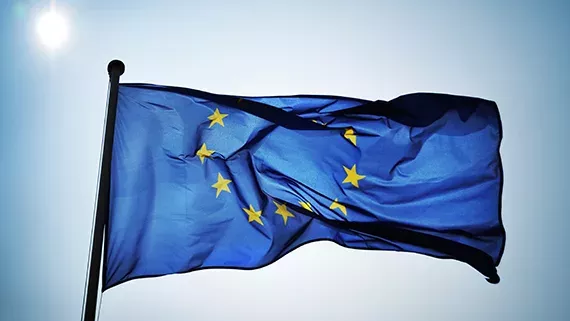
The diplomatic drama unfolded behind closed doors in Brussels, but its shockwaves can be felt across Europe’s capitals. Recent days have seen the European Union at odds with itself, struggling to agree on how best to respond to the eruption of conflict involving Iran. While officials gathered in Brussels in an attempt to forge a unified position, arguments over military intervention and national interests bubbled rapidly to the surface. In the space of just one fraught week, the rift between countries choosing force and those urging restraint has become impossible to ignore.
Discord at the Heart of Europe
Events escalated sharply since the conflict burst onto the scene on Saturday 28 February, sparking urgent, yet often inconclusive, summits among European leaders. Heading the charge was Kaja Kallas, the EU’s foreign policy lead, who admitted on 5 March:
"We are in this European Union with 27 countries… so of course we might have different views."
That understatement barely masked the simmering disagreements dividing the bloc. From Paris to Madrid to Berlin, each power seemed to be playing its own game, leaving Brussels scrambling to contain the diplomatic fallout.
The lack of a concrete, immediate European response illustrated how divergent historical backgrounds and strategic cultures drive positions behind closed doors. France, with its tradition of diplomatic intervention, favored moderation and international legality, while Germany’s traumatic 20th-century legacy sometimes translates into an instinct for solidarity with transatlantic allies. Meanwhile, Spain’s recent experience managing foreign military cooperation on its own soil spurred greater insistence on national decision-making. This context added fuel to an already combustible mix, impeding the formation of any unified European voice.
Spain and Germany: Allies at Odds, US in the Middle
Among the fiercest confrontations, the standoff between Spain and Germany has caught global attention. Friedrich Merz, Germany’s chancellor, aligned firmly with American and Israeli military operations, denouncing Iran as a "terrorist state." In open contrast, French president Emmanuel Macron declared that Paris "cannot approve" of Tehran’s conduct, backing the Spanish position. Spanish Foreign Minister José Manuel Albares, speaking to Cadena SER radio on Wednesday, voiced blunt frustration over Germany’s stance and pleaded for greater "solidarity" from Berlin, even suggesting that former chancellors Angela Merkel or Olaf Scholz would have shown Madrid more support during such a visit to Washington.
As the war debate raged on, Spain went further, expelling US military planes from its bases. That triggered a sharp warning from President Donald Trump, who threatened to "cut off all trade" with Madrid. Meanwhile, each EU nation moved alone to evacuate its own citizens, with no sign of coordinated EU-wide action emerging by 5 March, despite rising risk for Europeans in the region. Attempts to convene an EU-wide emergency session, as announced by Ursula von der Leyen, were met with criticism after it became clear the key meeting would not occur until Monday 2 March, fueling mockery and worries about slow crisis response mechanisms.
For ordinary Europeans and diplomats alike, these rifts were more than political theatre. As embassies scrambled to assemble evacuation lists and charter flights, families awaited news on whether their governments could ensure safe passage out of the Middle East. The lack of a joint framework led to duplication of efforts and confusion, with some smaller member states voicing anxiety about their ability to conduct complex operations alone. In the background, companies with exposure to transatlantic trade faced fresh uncertainty as talk of US-EU economic retaliation gained traction. Business federations in Madrid voiced alarm at Trump’s statements, fearing a cascade of disruptions throughout supply chains already stressed by past crises. The diplomatic tension quickly bled into economic risk, with eurozone markets reflecting mounting investor fears over the possibility of tit-for-tat trade restrictions. These developments, moving far beyond symbolic diplomatic gestures, threatened to reshape EU external policy credibility and its role as a unified global actor.
Institutional Paralysis and Calls for Reform
Behind these political fireworks, deeper questions about the EU’s crisis playbook have risen. A committee first established during the Brexit and Covid-19 emergencies convened to address the turmoil, only to admit it lacked the mandate to advise member states on collective action. The lack of a common evacuation strategy, and mounting tensions between allies, with threats of economic retaliation from Washington, laid bare the need for reform. The bruising episode raises uncomfortable questions for Brussels: can the EU actually act together when it matters most, or will national rivalries continue to undermine its ambitions?
Pressure is now mounting for the reauthorization or reinvention of such emergency committees, with some Commission officials privately pointing to the failures exposed in this week’s events as an argument for treaty change. Critics warn that crisis management risks falling victim to the same structural weaknesses that hampered Brussels during the migratory and financial emergencies of the past decade. Meanwhile, member states wary of ceding sovereignty show little appetite for empowering a stronger supranational mechanism—especially when national interests risk being overridden in sudden, high-stakes situations. While no consensus emerged from the 5 March meeting in Brussels, both supporters and skeptics of deeper integration now see the Iran crisis as a turning point. Whether or not the EU can marshal its disparate voices into a coherent strategy, the demand for a pragmatic rethink of its crisis architecture is now impossible to dismiss.
Read more:
"taking each stage very lightly" – What is really happening for expats fleeing Dubai?
“Thank you for all your messages”: Kate Ferdinand speaks out after Dubai air strikes
“Expectations have changed” – why are so many five-year-olds starting school in nappies?
Sources used:
EU split over using force or diplomacy in Iran as Spain and Germany lock horns in bitter spat over war in Middle East